

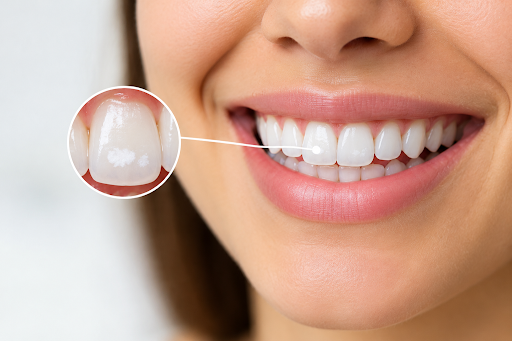
White spots on the teeth are much more prevalent than many would think. They could be subtle, chalk-like spots near the gums, little specks that appear throughout the front teeth, or a big cloudy spot that appears on just one of the teeth. Some people can have white spots that they don’t really even notice, while others have spots that pop out at them right away whenever they smile.
Sometimes white spots indicate an underlying problem, and sometimes not. Understanding what causes white spots is essential for both keeping your teeth healthy and deciding how to address them.
What Causes White Spots on Teeth?
1. Early Tooth Decay (Demineralisation)
One of the most common causes is the earliest stage of tooth decay. When plaque sits on teeth, bacteria produce acids that draw minerals out of the enamel. The affected area turns chalky, matte and white. These are often called white spot lesions.
These spots usually appear near the gumline or between teeth, where plaque tends to build up. The good news is that at this early stage, the enamel surface is often still intact. With the right care, the process can be stopped and sometimes partly reversed before it becomes a cavity.
2. After Braces
Such white spots appear upon the removal of braces since they are caused by the difficulty of cleaning the tooth surfaces due to brackets, which results in the accumulation of plaque and demineralization of enamel. The same problem may occur in clear aligners if teeth are not adequately cleaned before wearing such aligners, especially if there were some sweet foods and beverages consumed beforehand.
3. Dental Fluorosis
This condition is characterized by excessive intake of fluoride by the child during the development of adult teeth under the gum line (prior to the age of eight). Its main cause is a habit of swallowing toothpaste.
The symptoms of mild fluorosis include small white streaks or flecks on multiple teeth in a symmetrical way. This is only a cosmetic problem, without any effect on the overall health of the child. It is not progressing further since it develops during the period of formation of the teeth. Nevertheless, an appropriate fluoride level is very important for the prevention of cavities, and it is highly effective.
4. Enamel Developmental Defects
Sometimes the enamel doesn’t form properly while a tooth is developing. This can produce white, cream or yellow-brown patches that are often softer than normal enamel. Possible triggers include:
- Illness or high fevers in early childhood
- Premature birth
- Certain medications
- An injury or infection affecting a baby tooth, which can disturb the adult tooth forming beneath it
One specific condition, molar-incisor hypomineralisation (MIH), affects the first adult molars and often the front teeth too. Affected teeth can be sensitive and more prone to decay and breakdown, so they need closer monitoring.
5. Temporary White Spots
Not every white spot is permanent. Teeth can briefly look chalky or patchy when they dry out, for example after sleeping with your mouth open or after a long dental appointment. Spots can also become temporarily more noticeable straight after teeth whitening. These usually fade within hours to days as the enamel rehydrates.
6. Acidic Food and Drink
Frequent exposure to acidic drinks and foods, such as soft drinks, sports drinks, citrus and some flavoured waters, can weaken enamel. When combined with poor plaque control, this increases the risk of demineralisation and white spots.
Why a Proper Diagnosis Matters
Different causes need very different approaches. A white spot that’s actually early decay needs to be stopped before it progresses. A spot from fluorosis that has been stable since childhood may simply be a cosmetic matter. During an examination, we look at the spots’ location, pattern, texture and history. If needed, we may also use X-rays to check for decay between the teeth.
Treatment Options for White Spots
Remineralisation
For early decay, the first goal is to help the enamel recover lost minerals. Options may include:
- Higher-strength fluoride toothpaste or professionally applied fluoride varnish
- Calcium and phosphate pastes, which support the remineralisation process
- Improving brushing, cleaning between teeth and diet
Remineralisation can strengthen the enamel and stop decay progressing. It may also make some spots less noticeable over time, though it doesn’t always remove them completely.
Resin Infiltration
Resin infiltration is a minimally invasive technique for certain white spot lesions, particularly those left after braces. A special resin is drawn into the porous enamel, changing how it reflects light so the spot blends in better. It requires little or no drilling, which makes it an attractive option for suitable cases.
Microabrasion
Microabrasion gently removes a very thin outer layer of enamel using a mild acid and abrasive paste. It can be effective for shallow, surface-level marks, including some cases of mild fluorosis.
Teeth Whitening
Professional whitening brightens the overall shade of the teeth, which can sometimes help white spots blend in. However, results vary. Spots may look more prominent for a short time straight after whitening, before settling. Whitening is often combined with another treatment for the best overall result.
Composite Bonding
For deeper or more noticeable spots, tooth-coloured composite resin can be applied to cover or replace the affected enamel. The dentist shapes and polishes it to match the surrounding teeth. Bonding is typically completed in a single visit and removes little natural tooth structure.
Porcelain Veneers
When white spots are widespread, deep, or combined with other cosmetic concerns such as shape or colour, porcelain veneers may be considered. Veneers cover the front surface of the teeth and can change their overall appearance. They involve more tooth preparation, so they’re usually recommended only when more conservative options won’t achieve what you’re hoping for.
How to Help Prevent White Spots
- Brush twice daily with a fluoride toothpaste
- Clean between your teeth every day
- Limit how often you have sugary or acidic food and drinks, especially between meals
- Take extra care with cleaning if you wear braces or aligners
- Supervise young children’s brushing, using an amount of toothpaste suited to their age
- Keep up with regular check-ups so early changes can be picked up
As a dentist in Brighton families have trusted for over 50 years, we often find white spots during routine check-ups, long before patients notice them themselves. When found early, decay-related spots can often be managed with simple, conservative care.
