

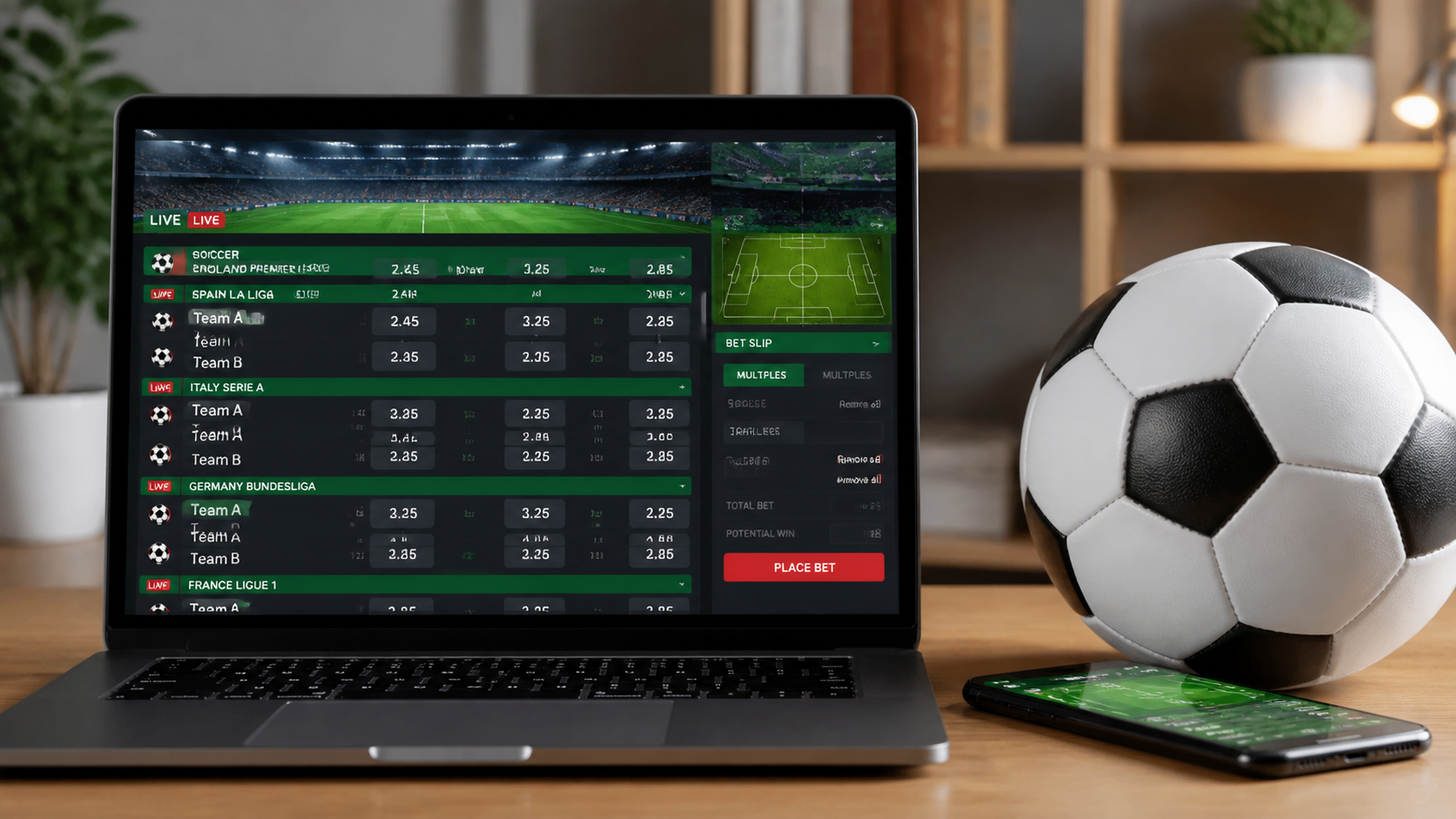
For readers who are exploring the gaming landscape in Singapore, sports betting is often one of the first areas that raises questions. The appeal is easy to understand: it combines knowledge of teams, matches, and timing with the structure of a wager. Yet the experience is not only about picking a side. It also involves understanding how platforms present markets, how rules differ from one site to another, and how to judge whether a site feels clear, usable, and responsible.
Because the topic sits at the intersection of entertainment, personal judgment, and digital convenience, it helps to look beyond the surface. A good betting experience is rarely defined by flashy design alone. Instead, readers usually benefit more from examining usability, market variety, account controls, payment flow, and the overall clarity of the platform. That is especially true when looking at sports betting sites Singapore, where the details matter just as much as the headline offers.
What sports betting sites actually provide
At their core, sports betting sites offer a way to place wagers on sporting events through an online platform. Some focus on popular global sports, while others may include a wider spread of markets tied to local interest. The user journey usually starts with registration, account verification, and funding, then moves into browsing events and selecting a market that matches the bettor’s interest.
What makes one site feel better than another is often not a single feature but the combined experience. A site may have many markets but still feel difficult to navigate. Another may have fewer options but present them in a much clearer way. That is why readers should think about how a site functions in practice rather than only how it is described in promotional language.
It also helps to remember that sports betting sites differ in how they organize odds, match categories, and live updates. Some users prefer a simple layout that lets them find major events quickly. Others want a platform with more detailed market choices. Neither approach is automatically better; the right fit depends on how the site aligns with a reader’s habits and comfort level.
How to assess a site before using it
Choosing carefully is more useful than chasing the most eye-catching offer. A site that feels easy to use, explains its rules clearly, and gives the bettor a sensible flow from browsing to checkout is often more practical in the long run. When people compare options, they usually benefit from looking at the same set of criteria each time.
- Navigation: Can you find sports, events, and account settings without confusion?
- Market clarity: Are the betting options explained in plain language?
- Payment flow: Is it easy to deposit and withdraw through the available methods?
- Account controls: Does the platform offer tools to manage limits and play habits?
- Customer support: Can users get help when something feels unclear?
These points may seem basic, but they often reveal how a platform is built. A site that is easy to move through usually reduces avoidable mistakes. A site that explains its terms carefully also helps users make more informed choices before placing a bet.
Usability matters more than people expect
Many readers focus first on betting options, but usability affects the entire experience. If a platform is cluttered, slow, or hard to read, even experienced users can make avoidable errors. Good usability is not about decoration; it is about making essential actions straightforward. That includes finding the event, checking the market, understanding the stake, and confirming the bet without second-guessing the interface.
Terms and conditions should be readable
Rules can vary in subtle but important ways. A site may handle market settlement, suspended events, or bonus conditions differently from another. Readers do not need to memorize every clause, but they should know where the important information lives and how to interpret it. If a platform hides key details or uses vague wording, that is usually a sign to slow down and review more carefully.
Types of betting features readers often compare
Different users are drawn to different parts of a sports betting site. Some enjoy straightforward pre-match wagers, while others want live betting that changes during the event. Some prefer a simple interface with a limited number of core markets, while others want more variety. Looking at these features side by side can make the decision process far more manageable.
Common areas of comparison include the breadth of sports covered, the depth of market choices, and the way live events are presented. In many cases, the important question is not whether a feature exists, but whether it is presented in a way that feels sensible and easy to follow. A platform can offer a wide range of options and still be difficult for the average user to navigate.
Pre-match and live betting serve different habits
Pre-match betting suits people who prefer to think ahead and review the event before placing a wager. It allows more time to compare options and consider the context. Live betting, by contrast, is more reactive and depends on what happens during the event. That can be appealing for users who enjoy watching momentum shift, but it also requires quicker decision-making and a sharper sense of timing.
Market variety can improve flexibility
A broader market selection can make a site feel more versatile. Some users may want only the main match outcome, while others look for more specific options tied to scorelines, player performance, or in-game developments. Variety is useful, but only if it remains readable. Too many choices presented without clear organization can create confusion instead of value.
Responsible play and account discipline
Any discussion of sports betting should include a practical reminder about pacing and personal limits. Betting is easiest to manage when it is treated as a form of entertainment rather than a way to force a result. That means deciding in advance how much time and money to spend, then sticking to those boundaries even when a match becomes emotionally intense.
Readers also benefit from noticing their own habits. If a platform makes it very easy to keep placing wagers without pause, it is worth stepping back and reviewing the experience. Responsible play is not only about avoiding losses; it is also about keeping the activity within a range that feels controlled and intentional. That may involve taking breaks, limiting session length, or choosing not to bet when concentration is low.
Another useful habit is separating sporting interest from wagering pressure. It can be enjoyable to follow a team closely without feeling the need to attach every match to a bet. The more a reader can preserve that separation, the more likely the experience will stay balanced. That perspective is especially valuable for anyone comparing sports betting sites Singapore, since a platform should support control rather than undermine it.
Common mistakes to avoid when comparing options
It is easy to focus on the most visible details and miss the practical ones. Many users are drawn to surface-level impressions, but those do not always reflect how a site will perform once an account is active. A careful comparison usually starts with the basics and moves outward from there.
- Choosing a site before reading how its rules are organized.
- Ignoring whether the layout makes key actions easy to complete.
- Focusing only on market quantity and overlooking clarity.
- Skipping the payment and withdrawal review.
- Assuming a welcome offer is more important than the overall user experience.
A thoughtful approach avoids rushing. The point is not to overanalyze every detail, but to make sure the platform feels coherent and manageable. If a site creates uncertainty at the start, that uncertainty usually does not disappear later. Clear structure, readable terms, and sensible account handling matter more than any single headline feature.
Final thoughts on choosing a better betting experience
When readers evaluate sports betting platforms, the most useful mindset is a practical one. Good options are usually the ones that combine clear navigation, understandable rules, and enough market variety to suit different preferences without overwhelming the user. That balance matters more than presentation alone.
For anyone approaching the subject with care, the goal should be to find a platform that supports informed, responsible, and comfortable use. A steady review of usability, terms, and personal limits will usually lead to better decisions than chasing short-term excitement. In that sense, choosing well is less about finding the loudest site and more about finding the one that makes the experience feel clear from start to finish.
