

Introduction
In modern surveying and construction, accuracy and efficiency are more important than ever. One of the most important tools used in this field is the total station. Professionals often compare Robotic Total Station vs Manual Total Station: Key Differences to decide which instrument best suits their project needs. Both devices serve the same core purpose—measuring angles and distances—but they differ significantly in operation, automation, and productivity.
Understanding Robotic Total Station vs Manual Total Station: Key Differences helps surveyors choose the right technology for improving workflow, reducing labor, and increasing measurement precision.
What is a Manual Total Station?
A manual total station is a traditional surveying instrument that requires a two-person operation. One person operates the device, while the other holds the prism at the target point.
Key Features of Manual Total Station:
- Requires manual aiming and adjustment
- Operated by at least two people
- Cost-effective compared to robotic models
- Reliable for basic surveying tasks
- Dependent on human accuracy and coordination
Manual total stations are widely used in smaller projects where budget constraints are a priority and ultra-high automation is not required.
What is a Robotic Total Station?
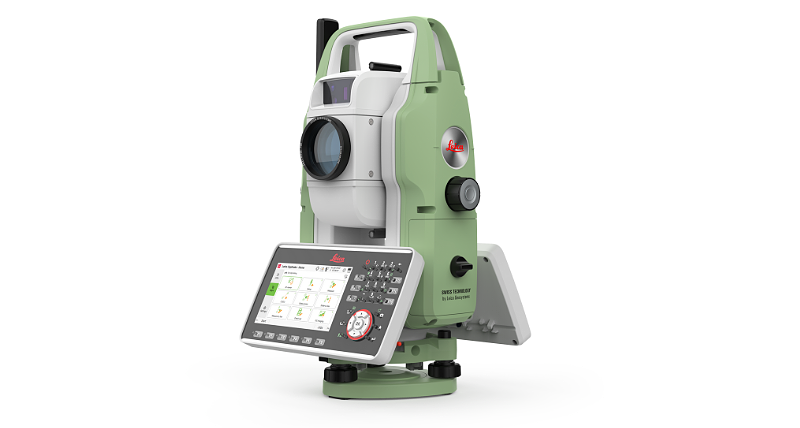
A robotic total station is an advanced version that allows one-person operation. It can automatically track the prism and adjust itself without manual intervention.
Key Features of Robotic Total Station:
- Fully automated prism tracking
- Operated by a single surveyor
- Higher speed and efficiency
- Reduced human error
- Integration with digital field software
Robotic systems are ideal for large-scale projects where time-saving and precision are critical.
Robotic Total Station vs Manual Total Station: Key Differences Explained
When analyzing Robotic Total Station vs Manual Total Station: Key Differences, several important factors stand out:
1. Workforce Requirement
- Manual total stations require two operators
- Robotic total stations require only one operator
2. Efficiency and Speed
- Manual systems are slower due to physical adjustments
- Robotic systems significantly improve productivity with automation
3. Accuracy and Error Reduction
- Manual systems depend heavily on human skill
- Robotic systems reduce human error through automated tracking
4. Cost Consideration
- Manual total stations are more affordable
- Robotic total stations are more expensive but offer long-term efficiency benefits
5. Technology Integration
- Manual systems have limited digital integration
- Robotic systems easily connect with modern surveying software and data systems
Advantages and Limitations
Manual Total Station
Advantages:
- Lower cost
- Simple operation
- Easy maintenance
Limitations:
- Requires more manpower
- Slower data collection
- Higher chance of human error
Robotic Total Station
Advantages:
- Faster operations
- Single-person use
- High precision and automation
Limitations:
- Expensive initial investment
- Requires technical training
- More complex maintenance
Which One Should You Choose?
Choosing between manual and robotic systems depends on project size, budget, and required accuracy. Small construction sites and educational purposes may still benefit from manual systems, while large infrastructure projects often rely on robotic technology for better efficiency.
When evaluating Robotic Total Station vs Manual Total Station: Key Differences, it becomes clear that robotic systems are the future of surveying, but manual instruments still hold value in cost-sensitive environments.
Conclusion
In conclusion, both instruments play an important role in modern surveying. The decision ultimately depends on operational needs and budget limitations. Understanding Robotic Total Station vs Manual Total Station: Key Differences allows engineers and surveyors to make informed choices that improve accuracy, productivity, and overall project success.
