

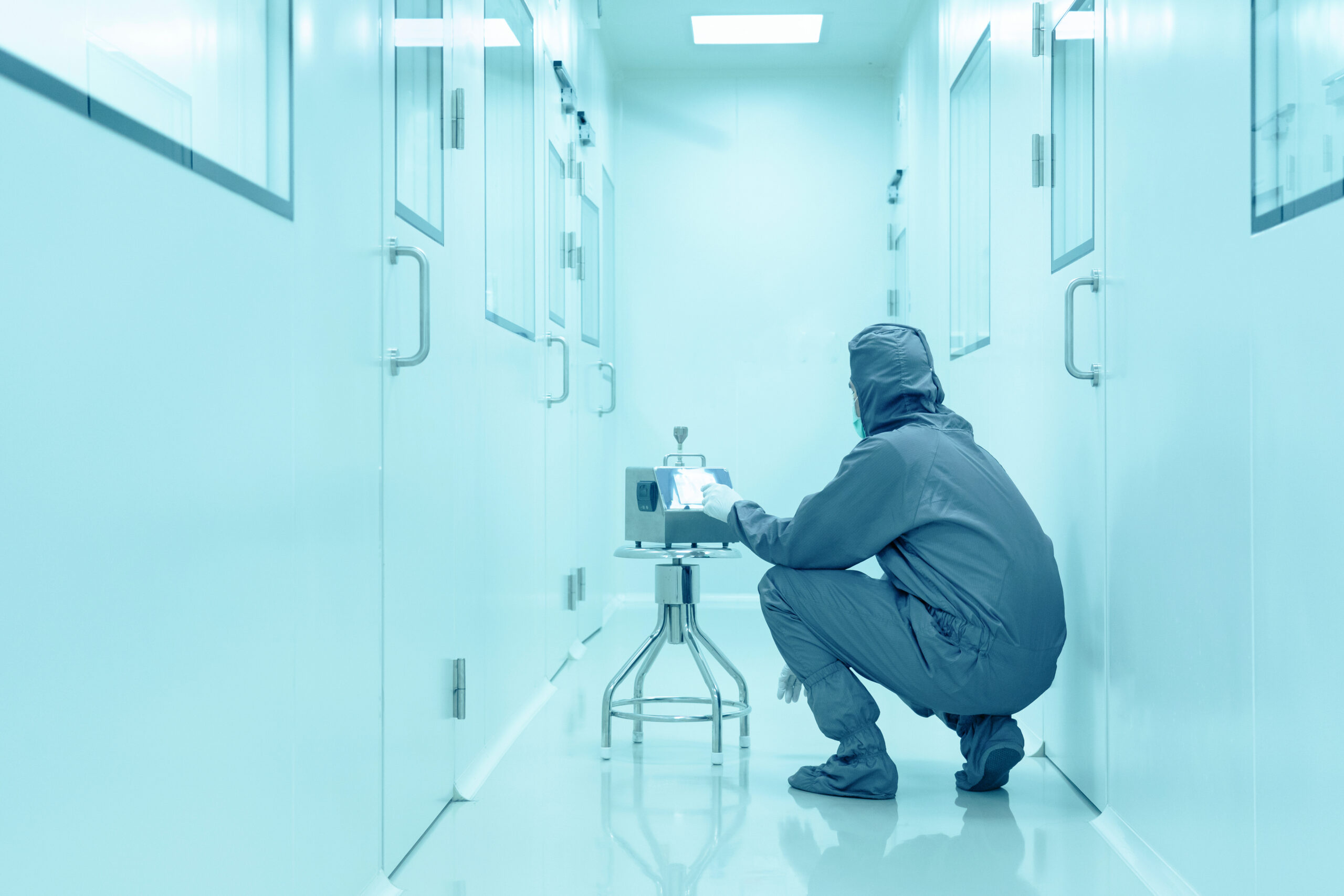
Laboratories that handle sensitive testing and research require strict cleanliness to protect accuracy, safety, and compliance. Even microscopic contaminants can affect results, damage equipment, and create health risks. This is why laboratory cleaning must follow controlled standards. When combined with particle count testing, laboratories gain measurable proof that cleanliness levels are maintained and contamination risks are effectively controlled.
What Is Laboratory Cleaning and Particle Count Testing?
Laboratory cleaning involves controlled procedures designed to maintain sterile, safe, and contamination-free environments. These practices go beyond routine cleaning by focusing on particle control, surface compatibility, and regulatory compliance.
A particle count test measures the concentration of airborne particles within a laboratory space, providing objective data on air cleanliness levels. When used together, laboratory cleaning and particle count testing ensure that cleaning processes are not only performed correctly but also validated for accuracy and compliance.
Controlled Cleaning Procedures and Protocols
Effective laboratory cleaning relies on structured protocols that minimise contamination risks. Trained teams use lint-free tools, lab-approved chemicals, and cleanroom-style cleaning methods to remove contaminants without introducing new particles.
Cleaning is carried out using defined zones and sequences, ensuring that lower-risk areas are addressed before higher-risk zones. This approach prevents cross-contamination and maintains stable environmental conditions throughout the laboratory.
Trained Personnel and Standardised Practices
Successful contamination control depends on personnel who understand laboratory and cleanroom requirements. Cleaning staff are trained in handling sensitive equipment, following safety guidelines, and adhering to established standard operating procedures (SOPs).
Standardised practices ensure consistency across all cleaning activities. By following uniform methods and documentation processes, laboratories reduce variability and maintain reliable cleanliness standards over time.
Particle Count Testing for Validation
A particle count test provides a measurable way to verify the effectiveness of laboratory cleaning. By measuring airborne particle levels before and after cleaning, laboratories can confirm that contamination has been successfully reduced.
This validation process supports quality assurance efforts and provides documented evidence for audits, inspections, and internal reviews. Particle testing helps identify problem areas early, allowing corrective action before contamination impacts results.
Scheduled Cleaning and Ongoing Monitoring
Cleanliness in laboratory environments must be maintained continuously. Professional providers implement scheduled cleaning programmes based on laboratory classification, usage intensity, and contamination risk.
Regular particle count testing complements these routines by monitoring changes in air quality over time. Ongoing monitoring ensures that cleanliness standards remain consistent and that any deviations are addressed promptly.
Compliance, Risk Reduction, and Quality Assurance
Combining laboratory cleaning with routine particle count testing supports regulatory compliance and audit readiness. These practices reduce the risk of contamination-related failures, protect sensitive equipment, and help ensure reliable laboratory outcomes.
A validated cleaning process also strengthens quality assurance systems, giving laboratories confidence that their environments consistently meet required standards.
Proven Cleanliness Through Measurable Control
Maintaining a clean laboratory requires more than routine cleaning; it demands controlled processes and verified results. By integrating professional laboratory cleaning with particle count testing, facilities can achieve consistent compliance, reduced risk, and dependable performance.
Contact Data Clean Asia today to speak with our experts and learn how our laboratory cleaning and particle count testing solutions can help keep your laboratory controlled, compliant, and contamination-free.
